





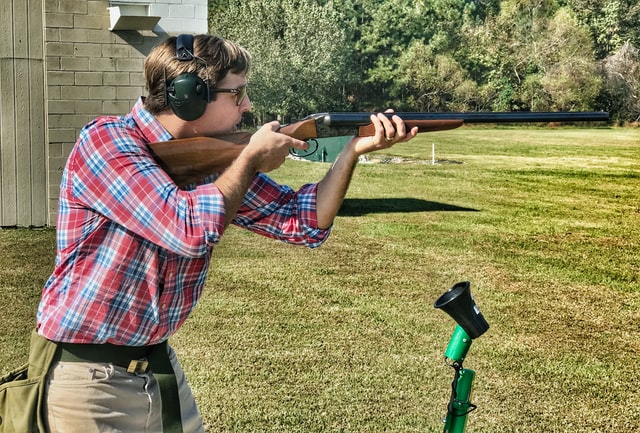
Being subjected to noise greater than 140 dB can permanently damage our hearing ability. A rifle of caliber 22 LR is already capable of reaching that decibel level, so in general terms, any firearm can damage our hearing. Therefore, whether practiced during a hunting trip or a professional shooting, it is always recommended to use hearing protection specially designed for these activities and prevent hearing damage.
Here’s how you can practice hunting and Firearms training without damaging your hearing!
Hearing Protections for Hunting and Firearms Shooting
There are many hearing protection solutions available on the market, mainly helmets and earplugs with different levels of technology. Unfortunately, evidence indicates that only half of shooters wear hearing protection the entire time they are on the shooting range.
This percentage is even reduced when we talk about hunters, because they consider hearing protectors a hindrance in their contact with the natural environment. They accuse plugs of preventing them from listening to the sounds of nature during hunting days, with the consequent damage when stalking prey in some hunting modalities.
It shows users’ ignorance about the possibilities offered by some of these products, allowing shooters to hear even the softest sounds while protecting them against firearm noise.
Usually, there are two types of devices in terms of their dimming mode:
- Constant dimming: These are helmets, plugs and molds that plug your ears, protecting them against all kinds of noise, not discriminating the soft from the loud.
- Selective dimming: Those with selective attenuation are the ones using electronic or mechanical technology, and are capable of separating the noises by their intensity, even, in the case of electronic ones, to amplify the weakest sounds.
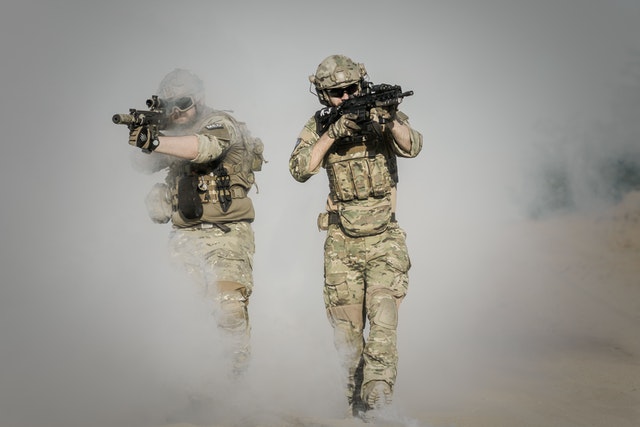
Mechanical type devices tend to have worse response times than electronic ones. They usually take longer to close before a loud noise. In addition, these protection devices are also used in the military during firearms training.
Prices for these devices range from less than a dollar for the simplest disposable earplugs to several hundred dollars for electronic helmets from well-known brands. However, different manufacturers have a wide range of solutions and prices.
Practical Tips to Protect Your Hearing During Hunting and Firearms Shooting
- Always wear some hearing protection device while practicing shooting.
- Always have at least some disposable plugs at hand in the shooting bag if you forget the device you usually use.
- If you are going to use special high-caliber weapons, such as an express rifle, double protection is a must.
- Consider noise as a variable when selecting a weapon and its caliber, along with other variables.
- Avoid shooting in groups or reverberant environments as much as possible.
- Use proven electronic or mechanical technology over other options whenever your budget allows.
Hearing loss is a danger to our health that stalks all hunters and shooters. There are enough solutions in the market to avoid it within reach of all pockets.
For more information on hearing health and quality hearing care, contact Bay Area Audiology. You can also get quality hearing aids to restore your or your loved one’s hearing.
.svg)
.svg)






.svg)
.svg)
.svg)
